

4.8 System-active:hyper-engagement

Rap records, cut by editors who only cut rap.

Editors who only cut rap, going through your record bar by bar. The hooks get found by ear. Software handles the trimming, the levels and the loop points, which is the part a machine is actually better at than a person.
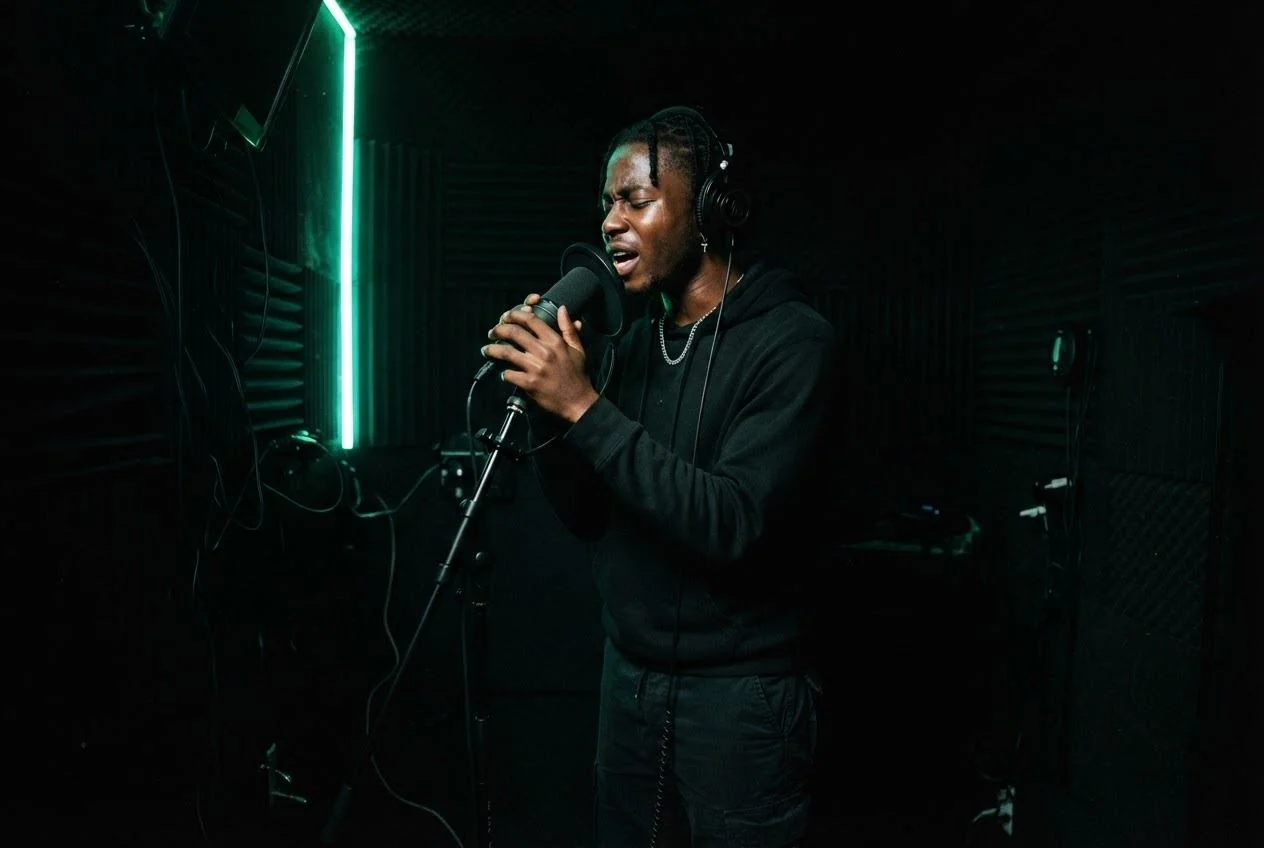
Rapper recording a vocal take in a booth lit by a green neon tube

Hook detected · 0:41–0:49

"Told 'em I'd be back" — Vaultboy

92 retention

Artists and labels already running on Lumina:

Adobe
OKX
Midjourney
Magic Eden
Polkadot
Algorand
Aviator
Caliente
Humanity Protocol
Macro AI
Forward Industries
Riverside.fm
Wispr Flow
Highroller
Our parent agency, Lumina Clippers, featured in

Algorithmic Pipeline

Five stages. Record goes in, clips come out, and you get a report that says which hook held attention and which one lost the room. The same five stages, written out in full, are on how a clipping campaign works.

  1. Deploy & Report

    Clips go out to the network. Then we watch which ones hold the room and which ones lose it.

  2. Verify & Analyze

    We log the BPM and mark every bar where the energy jumps. Nothing exotic about it. It is the same pass a mix engineer makes before touching a fader.

  3. Match Vectors

    Audio profiles cross-referenced against real-time trending velocity databases.

  4. Detect & Extract (Clip)

    Editors mark the hooks and the drops first, by ear. Always by ear. Then the cuts get trimmed so each one loops back into itself cleanly rather than stopping dead, which is the difference between a viewer watching twice and a viewer scrolling.

  5. Ingest & Submit

    Raw stems and masters fed into the secure processing node. High-fidelity parsing initiated.

what we actually do

Four Moves. One Outcome: Pipeline The sound travels.

Five stages. Record goes in, clips come out, and you get a report that says which hook held attention and which one lost the room. The same five stages, written out in full, are on how a clipping campaign works.

Snippet Lab

We cut your record into 8–14 second hooks and A/B test which one actually stops the scroll before a dollar of spend goes out.

  • Hook mapping from waveform
  • Caption + on-beat text
  • 6 variants per record

Volume Clipping

A room of editors who only cut rap. Nothing else. Catalogue, live sets and studio rolls come back as posts that read like they came off a fan page rather than out of a marketing department.

  • 300–1,200 clips / month
  • Vertical-native grading
  • 24h turnaround

Clipper Network

Vetted hip-hop pages post your sound from real accounts with real audiences. No bot farms. No view-bots, and no takedowns, because every placement is cleared before it goes anywhere near a feed.

  • Genre-matched pages
  • Sound-first posting
  • Per-post reporting

Signal Room

Live dashboards on saves, sound creations and retention so you know which record to push to radio and which to shelf.

  • Sound-page tracking
  • Retention curves
  • Weekly label-ready recap

from WAV to Wave

The 30-Day Clip Cycle

  1. 01

    Drop the record

    Send the WAV, the visualiser, the phone footage, whatever exists. We build the asset bank in 48 hours.

  2. 02

    Cut & test

    Six hook variants per record go live across seeded pages. Then the algorithm votes. We read the votes rather than arguing with them, and the variant that held retention gets the volume while the other five are quietly retired.

  3. 03

    Pour fuel on the winner

    The hook that holds retention gets the volume. Hundreds of clips, creator pushes, and the sound page working as one destination instead of five.

  4. 04

    Convert to streams

    Pre-saves, profile traffic and DSP links go into every caption. Views should land where they pay.
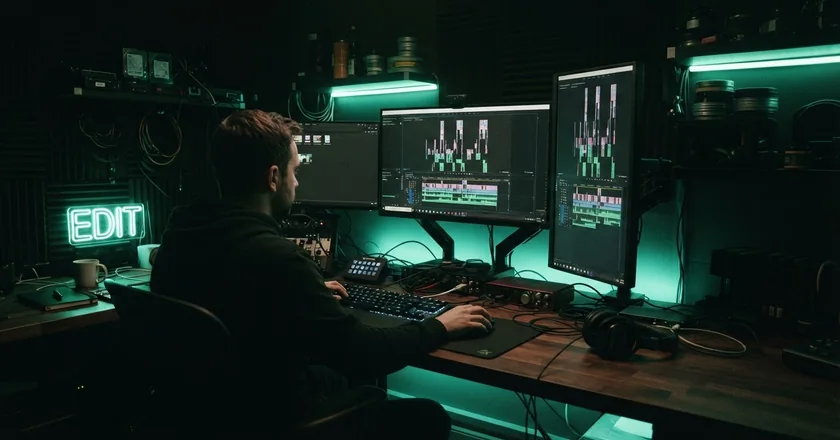
An editor working across two timelines in a green-lit edit suite

A room of 40 editors, on rap only

Our editors came off artist channels and fan pages. They know the difference between a drill edit and a boom-bap edit. That is why our clips read as fan-made instead of as an ad, and why they survive the first three seconds.

what it adds up to

Views are the input. streams are the output

Clipping only counts if the sound page fills up and the DSP numbers move with it. Otherwise you bought impressions. Every campaign here is measured on sound creations and saves rather than on a screenshot of a view counter.

840M+Organic views generated
12,400Clips shipped monthly
31Charting records seeded
4.2%Avg. save-to-view rate
Case study · "Runner" — Saint Cairo

9K 410K daily streams

42 days

38,900Sound creations
6.1%Save rate
#14Peak Viral 50

where the clips land

Every Surface rap lives on

Volume is split by where your record's audience actually sits. Drill skews TikTok and boom bap skews YouTube, so the campaign gets weighted to match rather than sprayed evenly across everything.

  1. 01

    TikTok

    Sound-page seeding, duets, creator raids

    46%
  2. 02

    Instagram Reels

    Audio-original posts + collab reels

    28%
  3. 03

    YouTube Shorts

    Official Artist Channel linked clips

    19%
  4. 04

    Snap Spotlight

    Overflow volume on rising hooks

    7%
clips that ran

Real Posts Real Pages Receipts

Request the full reel
TikTok

@lowkey.mob

BLOCK HEAT

4.1M 214K 8.9K

Reels

@prod.venom

NIGHT SHIFT

2.7M 214K 8.9K

Shorts

@saintcairo

RUNNER

6.9M 214K 8.9K

the clipper network

Rap pages Zero bots

Each page is human-run, genre-tagged and audited quarterly for real audience. You get the post link for every placement. Open them, read the comments, check it yourself.

Takedown-safe · no engagement pods
@westsidetapesWest Coast640K
@rageroomRage / Hyperpop1.7M
@soulcratesfmBoom bap410K
@nolimiteditsSouthern980K
@midnightflowsR&B adjacent1.1M
@trapfilesDrill / UK1.2M

Genre-matched, not mass-blasted

A drill record goes to drill pages. Matching lane is the single biggest driver of watch-through we have measured.

Sound-first posting

Every placement uses your official sound, cleared before it posts. Creations pool on one page instead of splitting across five duplicates that each look like a small campaign.

Per-post reporting

A live sheet of every URL, page, post date and 72-hour performance. Nothing hides behind a summary number.

Questions artists and labels actually ask

It runs the creator side of a campaign for you. Not one polished film. A batch of native videos from real creators, posted on their own pages in their own voice, which is the only format a scrolling audience does not immediately clock as advertising and thumb past.

We handle the sourcing, the brief, the edit standard and the posting order, then report what each clip actually did. The point is spread. Ten angles on one record will outperform one expensive film that either works or does not, because you find out which angle landed instead of guessing about it afterwards.

A music clipping campaign takes one record, a video or a live set, cuts the hooks, posts the clips on creator accounts, and reports verified views. Every clip is tied to the official sound.

Views are not the same as streams. Clips are cut and posted so the official sound is in the frame. Saves and streams are reported when we can see them. We do not promise a Spotify number.

One record, the rights to use it, and a view number. We match creators, cut the hooks and post. You do not build a clipper roster yourself.

It is a custom CPM. A set price per 1,000 verified views, scoped per campaign rather than read off a rate card, which is why we ask about the record before quoting anything. Two things move it: how many approved clips you want, and how wide we seed across the roster.

There is no retainer lock and no long contract. Send the record and the goal, and you get a quote back with the deliverable count written down.

Briefing and creator matching come first, then clips land in waves rather than all at once. You see early cuts while there is still time to steer tone, before the bulk of the roster posts.

Give us the release date up front. We build the seeding schedule backwards from it, so the first wave is already live and pooling creations by the time the record actually drops.

You own the campaign output. Every creator signs a licence before they post, so anything you approve is cleared for your own channels.

Paid usage is separate: running a clip as an ad, whitelisting it, or using it past the campaign window is agreed and priced up front, because that is what the creator is licensing to you. Nothing gets used beyond what is written down.

You reject it. You do not pay for it. Approval is per clip, so nothing counts toward your deliverables until you have signed that specific clip off, which also means a weak batch cannot quietly eat the budget.

If the problem is direction rather than execution, we re-brief and the creator reshoots. If a whole angle is not landing, we drop it and move those slots to the ones that are.

A marketplace hands you a list. Then the work is yours: briefing, chasing, reviewing, rejecting, scheduling, and doing all of it again next week when half those creators have gone quiet. An agency does that work and carries the result.

If you have an in-house team with time to run creators, a marketplace is cheaper. If you want clips landing on a schedule without managing twenty people, that is the job we do.

Yes. Ad variants get briefed differently to organic clips: a harder hook in the first second, a clearer artist or product moment, and a cut that still reads with the sound off.

Tell us up front that clips are going into paid. It changes both the brief and the usage licence we take from the creator.

View more questions

Send us one brief. Judge us on the videos.

Book a Call

Powered by Lumina Clippers linked.